

The 5 Local Ranking Factors That Determine Whether Your Roofing Company Wins or Loses
Whitespark’s annual local search ranking study reveals the exact local seo ranking factors that put roofing companies at the top of Google Maps results. These aren’t theories or guesses; they’re based on hard data from thousands of local searches.
If you’re not optimizing for these five factors right now, you’re invisible to homeowners searching for a roofer in your area. Here’s what matters most and what you need to fix today.
Top 5 Local SEO Ranking Factors for Roofers:
1. Primary GBP (Google Business Profile) Category: Get This Wrong and Nothing Else Matters
 Your primary Google Business Profile category is the single most important signal you send to Google about what your business does. This isn’t the place to be creative or vague.
If you’re a roofing contractor, your primary category must be “Roofing Contractor.” Not “Contractor.” Not “Home improvement.” Not “Construction company.” Those broader categories might seem like they cast a wider net, but they actually hurt you.
Google uses your primary category to decide which searches your business should appear in. Choose the wrong one and you won’t show up when someone searches “roofer near me” or “roof repair [city name]”. These are the exact searches that bring you customers.
Check your GBP right now. If your primary category is anything other than “Roofing contractor,” change it immediately. You can add secondary categories for related services like “Roof repair service” or “Siding contractor,” but your primary category is non-negotiable.
2. Proximity: You Can’t Fight Geography, But You Can Work With It
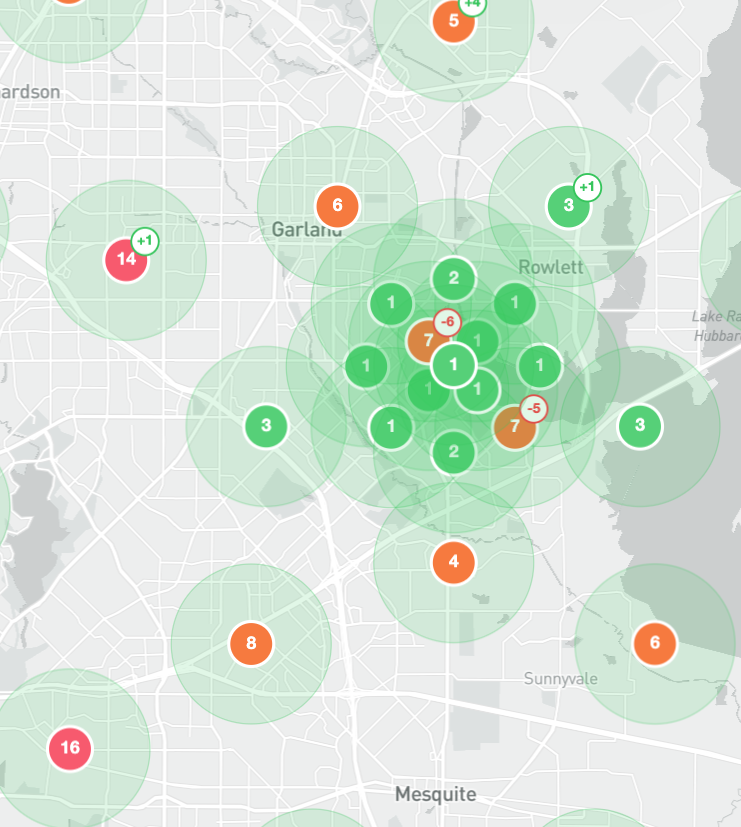 Distance between your business address and the searcher’s location is a ranking factor you can’t completely control. Someone searching from the south side of town will see different results than someone on the north side.
But here’s what you can do: define your service areas strategically in your GBP. List every city and neighborhood you serve. This tells Google where you’re relevant.
If you operate from a home office or outside your primary service area, consider getting a physical address in the city where you want most of your business. This must be a legitimate office, not a PO box or virtual address, because Google will see through that (reach out to me directly because while there are some work-arounds, I don’t post them publicly). This is particularly critical if your competitors have addresses in the city center while you’re operating from the suburbs.
Stop hoping customers from the other side of town will find you. Make it easy for Google to connect you with searchers in your target area.
3. Keywords in Business Title: The Line Between Smart and Spam
Including relevant keywords in your GBP business title can boost your rankings, but you need to be careful here. Google’s guidelines prohibit keyword stuffing in business names.
(By the way, if any of this SEO jargon is throwing you, check out my complete glossary of SEO terminology)
If your legal business name is “Smith Roofing,” that’s what should appear in your GBP title. However, if you legitimately do business as “Smith Roofing & Repair” or “Smith Roofing Contractors,” you can use that.
What you cannot do is change your business name to “Smith Roofing Best Roofer Dallas Roof Repair.” Google will penalize you or suspend your listing entirely.
Want to check your local ranking for your top keyword? Click here!
The smart play: if you’re establishing a new business or rebranding, consider incorporating location or service descriptors into your actual legal business name. “Smithtown Roofing” or “Smith Roofing Contractors” are legitimate names that include helpful keywords.
For existing businesses, focus on the other factors you can control. Don’t risk suspension by violating Google’s guidelines just to jam keywords into your title.
4. Physical Address in City of Search: Location Is Everything
Having a physical address in the city where people are searching gives you a massive advantage over competitors who serve that area but are based elsewhere.
If you’re a roofing company in Springfield but most of your competition is based in neighboring towns, your Springfield address is gold. You’ll naturally rank higher for “roofer Springfield” than companies located outside the city limits.
This is why expanding your service area isn’t always the answer. It’s better to dominate three cities where you have strong local presence than to spread yourself thin across ten cities where you’re just another out-of-town option.
Can’t afford multiple offices? Focus your marketing on the cities closest to your physical location. Build your reputation there first. Establish yourself as the local roofer, not the regional one.
5. Business Hours: Be Open When Customers Need You
Google gives preference to businesses that are open when someone searches. If a homeowner searches for a roofer at 6 PM on a Tuesday and you’re marked as closed, you’re at a disadvantage.
This doesn’t mean you need to answer phones 24/7, but your listed hours should reflect when customers can actually reach you. If you check emails and return calls until 7 PM, your hours should say you’re open until 7 PM.
Many roofing emergencies happen outside standard business hours. If you truly do offer emergency services, mark your business as open 24 hours or extend your listed hours to reflect your availability.
Update your GBP immediately if your hours have changed. Closed for a holiday? Mark it in advance. Temporary schedule changes? Update them in real-time.
Take Action Now
These five factors determine who gets the call and who gets ignored. Stop waiting. Log into your Google Business Profile today, audit these elements, and fix what’s broken. Your competitors are already doing this work—every day you wait is revenue walking out the door.
If you want help with your local seo strategy, click here!